Prodigy Disc
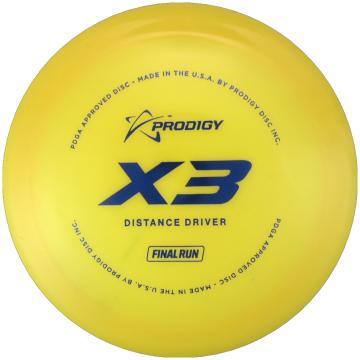
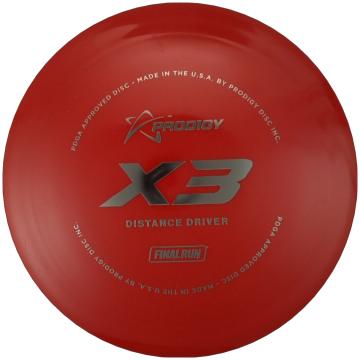
400G X3 Final Run
Disc Info
HelpCondition
Markings
Product Info
Product description:
Prodigy Disc 400G X3
The Prodigy Disc X3 is a consistent, very long flying, slightly over stable distance driver designed for all skill levels. The X3 is a great choice for any player looking to throw long, fast, and dependable drives. The X3 is slightly less stable than the X2, giving it a longer glide period in the middle of the flight path, and a softer left to right finish. The X3 matches the X1 and X2 in consistency but exceeds in turn and glide.
Plastic:
400G
400G series is the regular 400 plastic with a shot of adrenaline. It is the base 400 plastic mixed with another resin that give the plastic a slightly different feel than the base 400 series. The additive also makes the disc more durable and requires more time to break it in.
Brand:
Prodigy Disc
The US-based Prodigy Disc is one of the most popular disc golf brands in Finland. Prodigy’s range includes disc golf discs, backpacks, targets and other course equipment, as well as various accessories. Powergrip is the official distributor of Prodigy Disc in Europe (except Norway). The discs are manufactured in the United States and China.
Prodigy Disc use a unique naming system: the first part of the model name is a letter indicating the disc type (for example, the PA series for putters, the A series for approach discs, the M series for midranges, the F series for fairway drivers, H for hybrid drivers, and D for distance drivers). Prodigy Disc’s premium plastic blends are 400, 500 and 750. The grippier and faster-wearing base plastics are 200, 300 and 350g.
Some of the most popular Prodigy Disc models include PA-3, P Model S, P Model US, D3 and PA-1.
Flight Numbers
The numbers that usually appear on the top of the disc indicate the flight characteristics of the disc. The most commonly used way to tell the flight characteristics is to use four numbers: speed, glide, stability and fade.
Disc Weight
Disc golf discs usually weigh between 140 and 180 grams. The lighter the disc, the less stable it is. Conversely, the heavier the disc, the more overstable it behaves.